
How DENSO WAVE’s LiDAR Solutions Are Transforming Railroad Crossing Protection
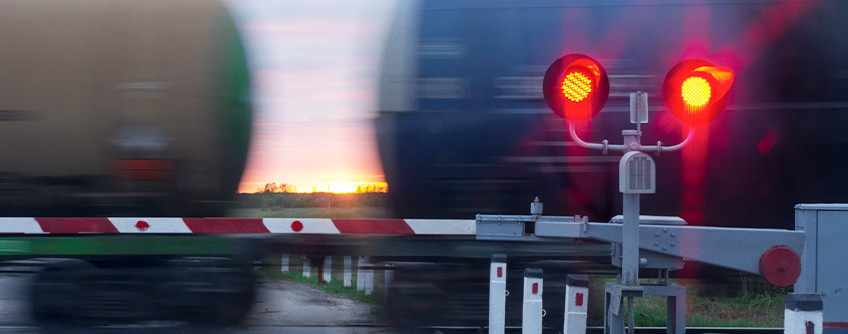
Railroad crossings remain one of the most persistent safety challenges in transportation. According to Federal Railroad Administration data, more than 2,000 injuries and 200 fatalities occur annually from grade crossing collisions and trespassing incidents in the United States. What is disturbing is that the numbers are holding steady. The complexity of modern railway operations, combined with increasing pedestrian traffic, distracted drivers and varied environmental conditions, necessitates safety systems that surpass the capabilities of conventional warning devices. To reduce the number of accidents and fatalities, the industry needs new, more advanced detection and prevention technologies. For OEM product managers, engineering leaders and executives developing next-generation railway signaling and control systems, the question is not whether to upgrade crossing-protection technology. It’s who can help you do it right.
DENSO WAVE, the Original Design Manufacturer (ODM) division of DENSO Corporation, brings a decisive answer. By translating its advanced automotive light detection and ranging (LiDAR) sensing technology directly into railway applications, DENSO WAVE offers a proven, high-reliability partner providing LiDAR technology for the railway applications market.
Why Traditional Railway Control Systems Fall Short
Railway grade crossings represent one of the most critical safety interfaces between rail operations and public roadways. Preventing collisions requires reliable systems that can warn motorists, detect obstructions and ensure crossings remain clear as trains approach. Over time, rail operators have implemented several layers of protection:
- Active protection systems
- Flashing lights and bells to alert approaching traffic
- Automatic gates that descend when trains approach
- Tracking circuits for train detection and gate activation
- Traditional obstacle detection
- Inductive sensors that detect metallic objects
- Induction loops embedded in crossing surfaces
- Recent alternative obstacle detection
- Millimeter Wave Radar that bounces radio waves off objects
- Cameras that provide images of the crossings
While many of these railway safety management systems have served as the foundation of crossing safety for decades, they face significant limitations:
- Detection gaps — Inductive sensors and loops struggle to detect small objects or non-metallic obstructions such as pedestrians and debris that could pose dangers to both trains and crossing users.
- False positives — Small metallic objects on or near tracks, including hubcaps, antennas, aluminum cans and other roadside debris, frequently trigger false alarms, leading to unnecessary service disruptions and desensitization to warnings.
- Limited situational awareness — Traditional systems provide binary detection (object present/not present) without detailed information about object size, location, movement direction or speed, critical data for intelligent decision-making.
The newer mm-wave radar and camera technology have their own limitations:
- Weather vulnerability — Poor performance in adverse weather conditions, such as fog, heavy rain or snow.
- Effects of sunlight/darkness — Cameras can oversaturate in bright sunlight or lose image clarity in low-light conditions.
These limitations create gaps in protection precisely when railway crossings need reliable monitoring.
Zone-D LiDAR: Precision Detection for Railway Control Systems
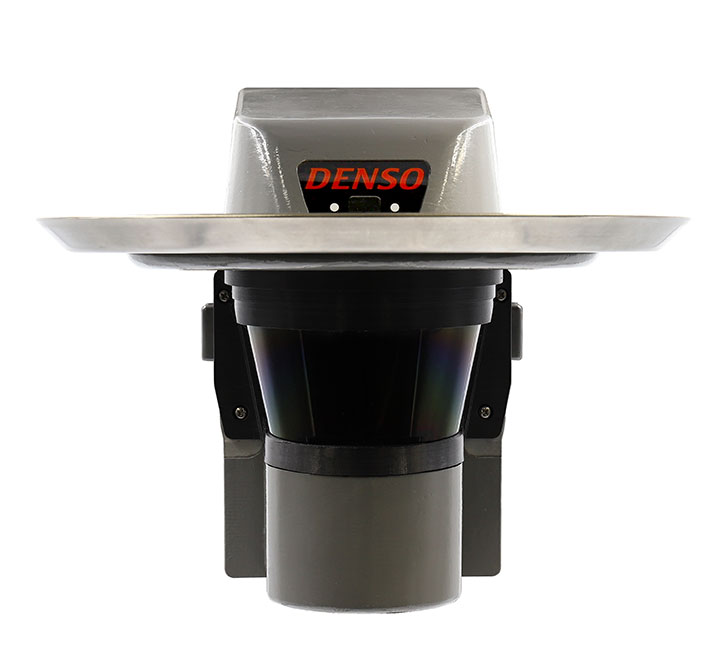
Developed specifically for railway crossing obstacle detection, the Zone-D system delivers capabilities far beyond traditional detection methods:
- Comprehensive object detection — The sensors detect stalled vehicles of all sizes and materials and identify pedestrians, wheelchairs, bicycles and other objects. The sensors also detect debris and obstructions regardless of composition and distinguish legitimate threats from harmless objects.
- Intelligent filtering — The Zone-D sensor incorporates DENSO Wave’s patented time-to-A/D technology and advanced algorithms that determine object size and trajectory, distinguish stationary objects from moving ones, filter out environmental noise and eliminate false alarms from non-threatening metallic debris.
- All-weather performance — Unlike camera-based systems, LiDAR technology maintains reliable detection through heavy rain and snow, dense fog, direct sunlight and darkness and temperature extremes.
- Configurable detection zones — Railway operators can define up to six different detection areas with customizable alarm levels and responses, enabling warning zones for approaching traffic, critical zones requiring immediate train alerts and pedestrian-specific monitoring areas. Depending on the zone, algorithms implement graduated response protocols.
- Real-Time Train Alarm Annunciation — When hazards are detected, the system can activate visual and audible warnings to alert trapped individuals, immediately open exit gates allowing trapped cars to pass, and send notifications to approaching train operators including location and object characteristics. If trains have automated brake systems, the LiDAR sensor can communicate indirectly with Positive Train Control (PTC) or European Train Control System (ETCS) interfaces.
DENSO WAVE collaborated with a major railway company to develop and deploy the Zone D sensor optimized specifically for railway crossing applications. This partnership has resulted in approximately 100 Zone-D series sensors installed across more than 50 railway crossings currently in operation. The system has demonstrated exceptional performance in preventing crossing incidents while virtually eliminating false alarms that plague conventional detection systems.
DENSO WAVE radar LiDAR technology for the railway applications market
Expanded Radar LiDAR Technology for Railway Applications Market
Beyond crossing protection, DENSO WAVE’s LiDAR technology addresses other railway safety challenges. The same sensor technology identifies fallen rocks and debris on mountainous corridors, detects trespassers before they reach active tracks, monitors tunnel integrity and clearance and detects passengers who are too close to the edge of a platform. The sensing system alerts train operators to the potential hazards or dangers to humans.
This versatility helps OEMs design comprehensive railway automation solutions. Rather than integrating separate solutions from multiple vendors, your team gains access to a unified sensing architecture — field-proven, manufactured to Toyota-quality standards, and supported by a single expert partner.
What’s Next: SPAD 3D LiDAR and the Future of Railway Control Systems
DENSO WAVE is already developing the next generation. Its Single-Photon Avalanche Diode (SPAD) 3D LiDAR technology — originally engineered for autonomous vehicles —delivers 10x higher sensitivity than conventional LiDAR. SPAD technology detects objects at greater distances and with higher precision than conventional LiDAR, enabling earlier hazard detection and response. Rather than simple point detection, SPAD LiDAR produces 2D high-resolution data that enables the creation of detailed two-dimensional maps of monitored areas. The new technology allows precise object location and dimensions, real-time movement tracking, detailed scene reconstruction and enhanced classification accuracy.
The new technology integrates the time-to-digital converter (TDC) and digital signal processing (DSP) on a single chip, dramatically reducing sensor size, weight, and power consumption. The compact package enables deployment in space-constrained railway environments.
The sensor design offers enhanced environmental performance. It will have an extended detection range in fog and precipitation, reliable operation in full sunlight and consistent performance across extreme temperature ranges.
Proven Lidar Results
- Earlier, more accurate hazard detection
- Fewer false alarms
- Reliable all-weather perfomance
- Continuous safety data
- Automated monitoring
This next-generation technology will enable even more sophisticated railway control systems, including comprehensive 3D mapping of crossing environments, predictive analytics based on movement patterns and integration with automated train operation systems. For OEMs designing products today, partnering with DENSO WAVE means accessing not just proven current technology, but a direct roadmap to next-generation technology.
Results For the Radar LiDAR Technology for Railway Applications Market
Railway operators who have deployed Zone-D LiDAR systems report outcomes that go straight to the bottom line of safety performance and operational efficiency:
- Significant reduction in crossing incidents through earlier, more accurate hazard detection
- Elimination of false alarms that previously disrupted operations and eroded operator trust
- Enhanced operational confidence from reliable all-weather performance
- Accumulation of valuable safety data enabling continuous improvement and targeted risk reduction
The combination of advanced detection capabilities, intelligent filtering, and seamless integration with existing railway systems creates a comprehensive safety enhancement that protects lives while improving operational efficiency.
The Future of Railway Safety Starts with the Right Partner
As railway control systems worldwide modernize and passenger volumes increase, the imperative for more sophisticated safety technology has become more important. DENSO WAVE’s automotive-derived LiDAR solutions represent a proven path forward — bringing cutting-edge detection capabilities, unmatched reliability, and comprehensive partnership support to railway safety applications.
DENSO WAVE brings four decades of automotive safety engineering discipline, proven LiDAR technology already operating on active railway crossings and a complete ODM model that carries your program from the first whiteboard session to a deployed and supported product. Whether you’re developing next-generation crossing protection systems, expanding track monitoring capabilities or building an integrated railway control system, DENSO WAVE offers the technology expertise, manufacturing capability, and collaborative approach to transform your vision into reality.
Enhance your Railway Safety System
Contact DENSO WAVE to explore how our LiDAR technology and ODM expertise can address your railway safety challenges. Visit originaldesignmanufacturer.com or contact us to start the conversation.
 Bob Coppenhaver
Leave a Reply